Travel Proposal Template: A Free, Client-Ready Framework
A complete travel proposal template you can copy and use today — every section, what goes in it, and the exact language that works. Plus a live version you can see rendered.
Most travel proposal templates you'll find are one of two things: a static Canva file you'll retype every trip, or a generic business-proposal form that was never written for travel and asks about "scope of work."
This is neither. It's the actual framework — every section, what belongs in it, and language you can adapt — that you can copy into whatever you build proposals in today. Use it as-is, or use it as a checklist against what you're already sending.
At the end there's a live version you can see rendered six different ways.
Before you start: the one rule
Everything in a proposal should do one of three jobs — show them the trip, make the decision obvious, or prove you're the expert. If a section does none of those, delete it. That's why there's no "About Our Company" boilerplate below. Clients aren't reading it.
The framework
Section 1 — Header
Your logo, your business name, the client's name, and the date.
Putting the client's name on it matters more than it sounds. It's the difference between a document that was made for them and a document that was made once and reused.
Prepared for Sarah & Mike Patterson Wander & Tide Travel · July 21, 2026
Section 2 — Trip overview
One headline and one short paragraph. The headline is the trip; the paragraph is why this trip, for this client.
Seven Nights in Alaska — Voyage of the Glaciers Discovery Princess · Round-trip Seattle · July 10–17, 2027
Sarah & Mike — here are three ways to celebrate twenty-five years. All three sail the same route through the Inside Passage with a full morning at Dawes Glacier, which is the day you'll both remember. The difference is where you watch it from.
That last line is doing enormous work. It frames the options before they see them, and it proves you listened.
Section 3 — Day-by-day itinerary
A row per day: day number, date, port, and times. Add a sentence wherever a client would otherwise not know what to expect.
Day 1 · Jul 10 — Seattle, WA · Depart 4:00 PM Day 2 · Jul 11 — At sea, cruising the Inside Passage Day 3 · Jul 12 — Ketchikan, AK · 7:00 AM – 1:00 PM Day 4 · Jul 13 — Juneau, AK · 8:00 AM – 8:30 PM Day 5 · Jul 14 — Skagway, AK · 7:00 AM – 8:15 PM Day 6 · Jul 15 — Endicott Arm & Dawes Glacier · Scenic cruising, morning Day 7 · Jul 16 — Victoria, BC · 7:00 PM – 11:59 PM Day 8 · Jul 17 — Seattle, WA · Arrive 7:00 AM
Note the early port times are shown rather than hidden. Managing expectations in the proposal is cheaper than managing disappointment later.
Section 4 — Your options
Two or three. Each one gets a name, a short description of what's different, and an all-in price.
Option 1 — Interior Stateroom · $1,149 per person Same ship, same itinerary, same glacier morning. The smart-value choice.
⭐ Option 2 — Deluxe Balcony, Deck 10 · $1,699 per person (recommended) Your own private glacier view. On an Alaska sailing this is the one I'd pick — you'll want that morning to yourselves.
Option 3 — Mini-Suite, Deck 11 · $2,149 per person More room to spread out, a separate sitting area, and priority embarkation.
Always mark a recommendation. Neutral option cards push the decision back onto the client. A clear pick, with a one-line reason, is the single most valuable sentence in most proposals.
Section 5 — Pricing, all-in
Show the math. Don't make anyone hunt for the real number.
Deluxe Balcony · 2 guests Cruise fare — $1,699 per person Taxes, fees & port expenses — $245 per person Total — $3,888 all-in
Deposit to hold: $200 per person · Final payment due April 11, 2027
Section 6 — What's included / not included
Two short lists. The second one builds more trust than the first.
Included: Accommodations, all main dining, entertainment, Wi-Fi, drinks package and crew appreciation (Princess Plus promotion).
Not included: Flights to Seattle, shore excursions, specialty dining, spa, travel insurance.
Section 7 — Why me
Two or three sentences, specific to this trip. Not a résumé.
I've sailed this route twice and placed more than forty families on it. If the balcony option is where you land, I'll get you a starboard cabin — that's the glacier side on this itinerary.
That last detail is the whole point. It's something the cruise line's website will never tell them.
Section 8 — Next step + validity
One action, one deadline.
Ready? Reply "book the balcony" and I'll hold it today. Pricing held through Friday, August 8. Alaska balconies for July sail early.
See it rendered
Here's that same structure as a real, published proposal — and you can flip it between six different designs to see how much presentation changes the read:
BAHAMAS
4 Nights Bahamas & Perfect Day Cruise
Day by day
Bahamas
4 Nights Bahamas & Perfect Day Cruise
Oceanview Balcony

Ultra Spacious Oceanview Balcony

Day by day
Bahamas
4 Nights Bahamas & Perfect Day Cruise
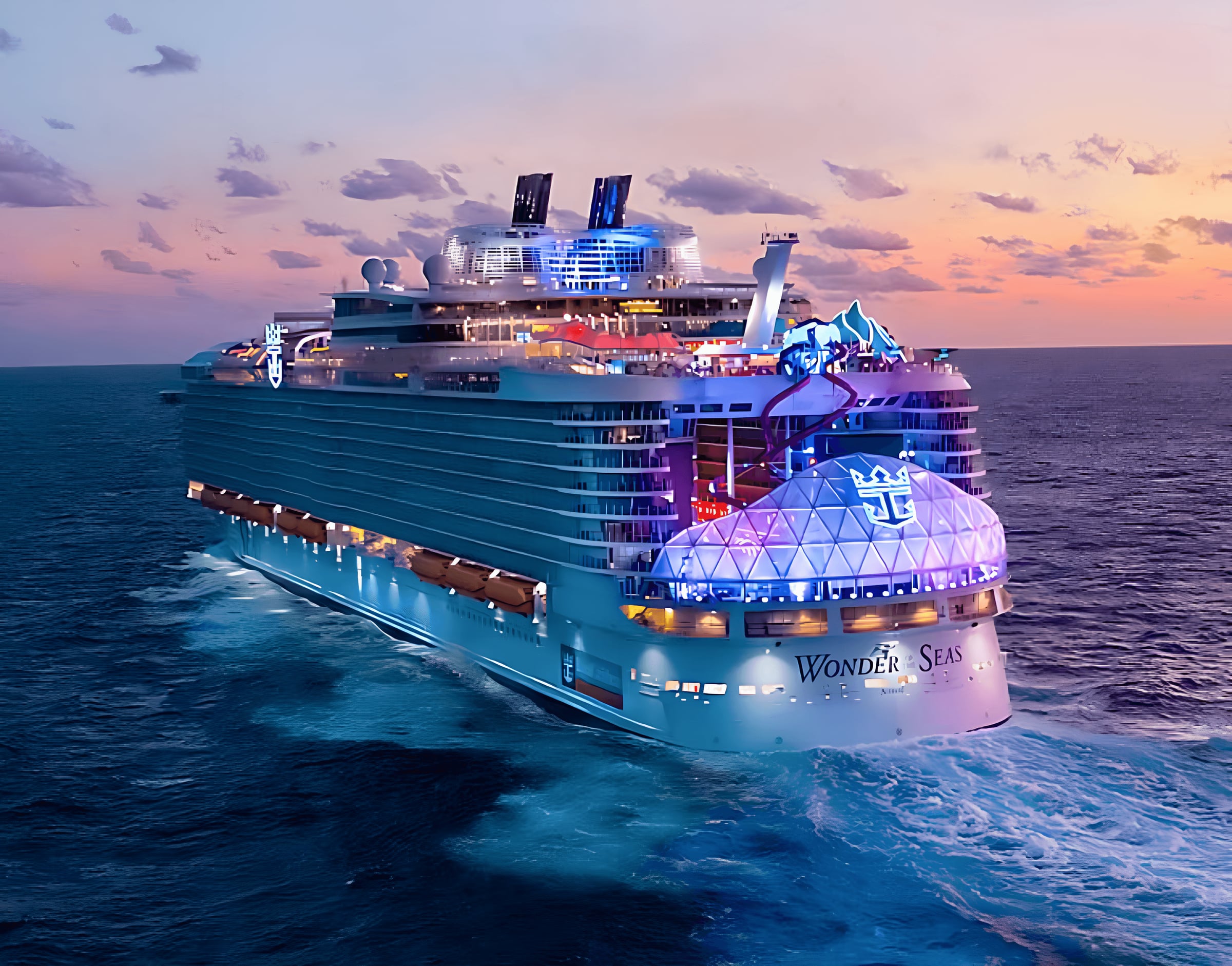
A 4-night sailing aboard the Wonder of the Seas — departing Port Canaveral on Aug 17, 2026.
Day by day
Same framework in every one. Only the styling changes.
Why a static template stops working
This framework will genuinely improve your proposals today. But it's worth being honest about what a template can and can't do.
A static template — Canva, Word, Google Docs — solves the structure problem once and then hands you the labor problem forever. Every trip, you're still:
- retyping ship names, dates, cabin categories and fares out of a supplier email
- rebuilding pricing tables and re-aligning boxes that drifted
- hunting for a decent photo of the right ship
- exporting, attaching, and hoping it opens properly on their phone
That's forty-five minutes to two hours per proposal, and almost none of it is expertise. It's data entry with a layout tool attached.
There's also a ceiling on what a static file can do. It can't open as a mobile-friendly link, it can't tell you when your client read it, and it certainly can't tell you the moment they decide they're in.
The live version
That's the gap VoyageLine fills. You paste the supplier email — or drop a screenshot of a fare grid — and we pull out the ship, dates, cabins and fares. You review every field, because you're the one who knows the client. Then it publishes as a branded proposal on a link that opens on their phone, in whichever of the six designs fits your brand.
Every section of the framework above is already built in. And when your client taps Ready to book, you'll know immediately instead of wondering.
For the reasoning behind each section, read How to make travel proposals that win bookings. For the presentation side, see How to make your proposals look professional.
Use the framework free, or let it build itself. Your first three proposals on VoyageLine are free — no card, no demo call. Build one free →
Keep reading
How to Present Pricing in a Travel Proposal (Without Losing the Booking)
Hiding the price feels safer and closes slower. Here's how to present travel pricing so clients feel in control instead of ambushed.
How to Make Your Travel Proposals Look Professional (Without a Designer)
A client decides whether you look like a professional operation in about ten seconds — before they've read a single detail. Here's what actually drives that judgment.
How to Present Multiple Options Without Overwhelming Your Client
More choice feels generous and behaves like a burden. Here's how many options to send, how to order them, and why a recommendation isn't pushy — it's the job.