How to Present Pricing in a Travel Proposal (Without Losing the Booking)
Where to put the price, how to show taxes and fees, and why all-in pricing closes faster. A practical guide to presenting travel proposal pricing transparently.
There's a persistent instinct among advisors to hold the price back — to sell the trip first, build the dream, and reveal the number once they're emotionally invested.
It's understandable, and it closes slower.
A client who can't find the price doesn't relax into the dream. They skim the whole document hunting for it, absorbing none of your carefully written trip description, and arrive at the number in a slightly suspicious mood. Whereas a client who finds a comfortable number early feels in control — and clients who feel in control move faster.
Here's how to present pricing so it works for you.
Show the all-in number
The single most important rule: whatever a client will actually pay should appear as one number, clearly.
For cruise that means three components, always totaled:
Cruise fare — $1,699 per person Taxes, fees & port expenses — $245 per person Total for two guests — $3,888 all-in
Port fees and taxes are the number one source of post-booking surprise in cruise, and they're entirely avoidable with two extra lines. A client who budgets $3,398 and gets a $3,888 invoice doesn't blame the cruise line. They blame you.
Always convert "per person" into a party total
Cruise and tour pricing is quoted per person, based on double occupancy. Your client does not think that way. They think about what leaves their bank account.
Show both. Per person for comparison against anything they've seen advertised, and the party total so nobody is surprised.
This one habit prevents more awkward conversations than any other pricing practice.
Put the price where they're already looking
Each option should carry its own price, right next to its name — not collected in a pricing table at the bottom.
When prices live in a separate section, clients have to hold two things in their head and cross-reference. When each option carries its own number, comparison happens instantly and without effort:
Interior — $1,149pp ⭐ Deluxe Balcony, Deck 10 — $1,699pp (my pick) Mini-Suite, Deck 11 — $2,149pp
Format prices identically, every time
Small thing, disproportionate effect. $1,849pp in one place and 1849 per person in another makes a document feel hand-assembled — because it was.
Pick one format and hold it. Align prices in a column so the eye can compare down the page rather than hunting across it.
List what's not included
The exclusions list is the cheapest trust in the entire document.
Not included: flights to Seattle, transfers, shore excursions, specialty dining, spa, travel insurance.
Advisors avoid this because it feels like drawing attention to costs. In practice it does the opposite — it signals you have nothing to hide, and it prevents the "I thought that was included" conversation, which is far more expensive than a line of text.
Price the promotion in real money
"Princess Plus included" means nothing to someone who doesn't cruise. Translate it:
Princess Plus included — Wi-Fi, drinks package and crew appreciation for both guests. Purchased separately, roughly $60 per person per day.
You've just turned an unfamiliar phrase into several hundred dollars of visible value. This is one of the highest-return sentences in a cruise proposal and almost nobody writes it.
Be explicit about payment terms
- Deposit — how much, per person, refundable or not
- Final payment date — cruise final payments land months before sailing and clients routinely forget
- Cancellation — at least a pointer to how penalties escalate
Deposit to hold: $200 per person · Final payment due April 11, 2027
Add a validity date
Pricing held through Friday, August 8.
One line. It protects you when supplier pricing moves — which it will — and it converts an open-ended decision into a small, natural deadline. Urgency you didn't have to manufacture, because it's true.
What about your fee?
If you charge a planning or service fee, put it in the proposal, plainly, with a one-line justification tied to what they're getting.
Fees discovered late feel like a trick. Fees stated up front, next to a document that visibly demonstrates expertise, feel like a rate. The proposal itself is your argument for the fee — which is another reason presentation matters.
See it laid out
Pricing hierarchy is easier to see than to describe. Here's a real proposal — flip between six designs and notice how the all-in total stays visually dominant in each:
BAHAMAS
4 Nights Bahamas & Perfect Day Cruise
Day by day
Bahamas
4 Nights Bahamas & Perfect Day Cruise
Oceanview Balcony

Ultra Spacious Oceanview Balcony

Day by day
Bahamas
4 Nights Bahamas & Perfect Day Cruise
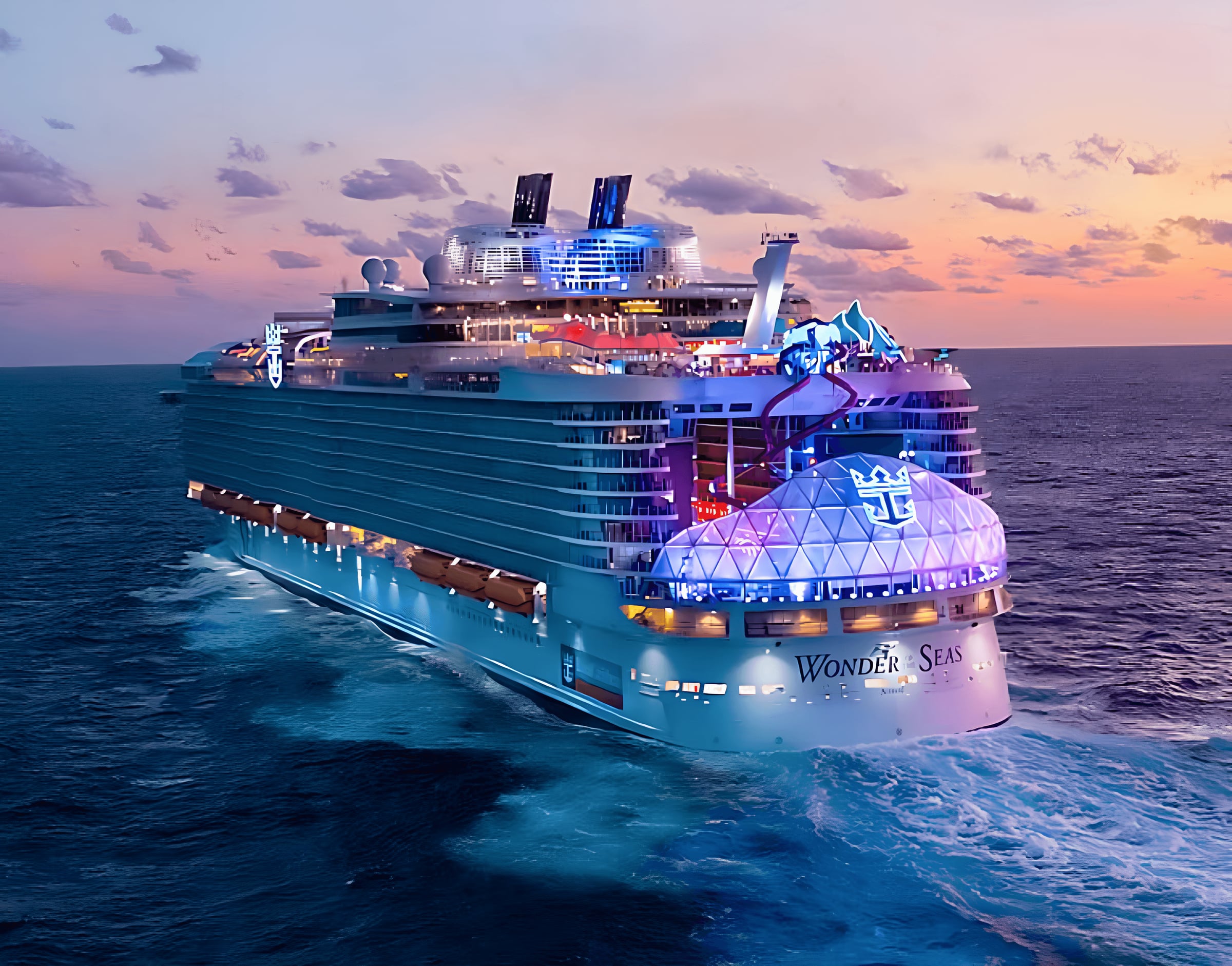
A 4-night sailing aboard the Wonder of the Seas — departing Port Canaveral on Aug 17, 2026.
Day by day
The short version
Show the all-in number. Convert per-person to a party total. Put prices next to options, formatted identically. List exclusions. Translate promos into dollars. State deposit and final payment. Add a validity date.
None of this is about being cheaper. It's about being clear — and clarity closes.
For the full document structure, read how to make travel proposals that win bookings. For cruise-specific pricing traps, see what to include in a cruise quote.
All-in pricing, laid out for you. First three proposals free — no card, no demo call. Build one free →
Keep reading
How to Make Your Travel Proposals Look Professional (Without a Designer)
A client decides whether you look like a professional operation in about ten seconds — before they've read a single detail. Here's what actually drives that judgment.
How to Present Multiple Options Without Overwhelming Your Client
More choice feels generous and behaves like a burden. Here's how many options to send, how to order them, and why a recommendation isn't pushy — it's the job.
How to Follow Up After Sending a Travel Proposal
Silence isn't a no. It's usually a busy week. Here's a follow-up sequence with actual language — and why the worst message you can send is 'any thoughts?'