How to Present Multiple Options Without Overwhelming Your Client
Three options beat seven, and a marked recommendation beats neutrality. How to structure travel proposal options so clients decide quickly instead of going quiet.
A client asks you to "send over some options." You want to be helpful, so you send six.
And then nothing happens.
This is one of the most common and least understood ways a proposal stalls. It doesn't feel like a mistake — it feels like service. But more choice reliably produces less deciding, and in travel it produces a specific failure: the client postpones, the enthusiasm from your consultation decays, and by the time they come back the fare has moved.
Here's how to structure options so people actually pick one.
Why more options backfire
Every option you add does three things, and only the first one is good:
- It increases the chance one of them is the perfect fit.
- It increases the effort required to compare them.
- It increases the anxiety of choosing wrong.
Past about three, the second and third overwhelm the first. The client isn't thinking how generous. They're thinking this is homework, and homework gets scheduled for later.
There's a second, subtler cost. A long option list quietly reassigns the expert role. If you present six equally-weighted choices with no guidance, you've handed the decision — and the responsibility — back to the person who hired you specifically so they wouldn't have to make it.
The rule: three options, one recommendation
Three is the number. It gives a genuine sense of choice, it's comparable at a glance, and it maps cleanly onto how people actually think about spending.
Structure them as good / better / best, in that order, and make the difference between them a single, comprehensible variable.
Interior — $1,149pp. Same ship, same itinerary, same glacier morning. ⭐ Deluxe Balcony, Deck 10 — $1,699pp. Your own private glacier view. Mini-Suite, Deck 11 — $2,149pp. More room, sitting area, priority boarding.
Notice what's constant: same sailing, same dates, same ports. Only where they sleep changes. When one variable moves, comparison is instant. When three move at once — different ships, different dates, different lines — the client has to build a spreadsheet in their head, and they won't.
Mark the recommendation, and say why
This is the part advisors resist, and it's the highest-leverage sentence in the whole proposal.
⭐ My pick — Deluxe Balcony, Deck 10. On an Alaska sailing you'll want that glacier morning to yourselves, and Deck 10 midship is the steadiest spot on the ship.
Advisors avoid this because it feels like pressure. It isn't. Neutrality reads as indifference — and worse, as a lack of conviction. A client who hired an expert wants the expert's opinion. Withholding it doesn't feel respectful to them; it feels like you don't have one.
Two things make a recommendation land:
- A reason tied to them. "You mentioned this is your anniversary" beats "it's our most popular."
- Something they couldn't have known. The glacier side, the steady deck, the quiet corridor. This is what they're paying you for.
Order matters more than you think
Lead with the middle or the recommended option if you can — or at minimum make it visually dominant. The first option a client reads becomes the anchor everything else is judged against.
If you lead with the cheapest, every subsequent option reads as an upcharge. If you lead with your recommendation, the interior reads as a saving and the mini-suite reads as a modest stretch. Same three numbers, completely different feeling.
The premium option earns its place even when nobody picks it. It gives the middle option context and makes it feel measured rather than expensive.
Make comparison effortless
Options should be scannable side by side, in the same format, with the same fields in the same order:
- Same labels, same order, every time
- Prices aligned and formatted identically (not "$1,849pp" here and "1849 per person" there)
- All-in totals shown, not just per-person fares
- Differences called out explicitly — don't make them infer
If a client has to read carefully to spot the difference between two options, you've already lost time you didn't need to spend.
Here's what that looks like rendered — and you can flip it between six designs to see how presentation changes how quickly the comparison lands:
BAHAMAS
4 Nights Bahamas & Perfect Day Cruise
Day by day
Bahamas
4 Nights Bahamas & Perfect Day Cruise
Oceanview Balcony

Ultra Spacious Oceanview Balcony

Day by day
Bahamas
4 Nights Bahamas & Perfect Day Cruise
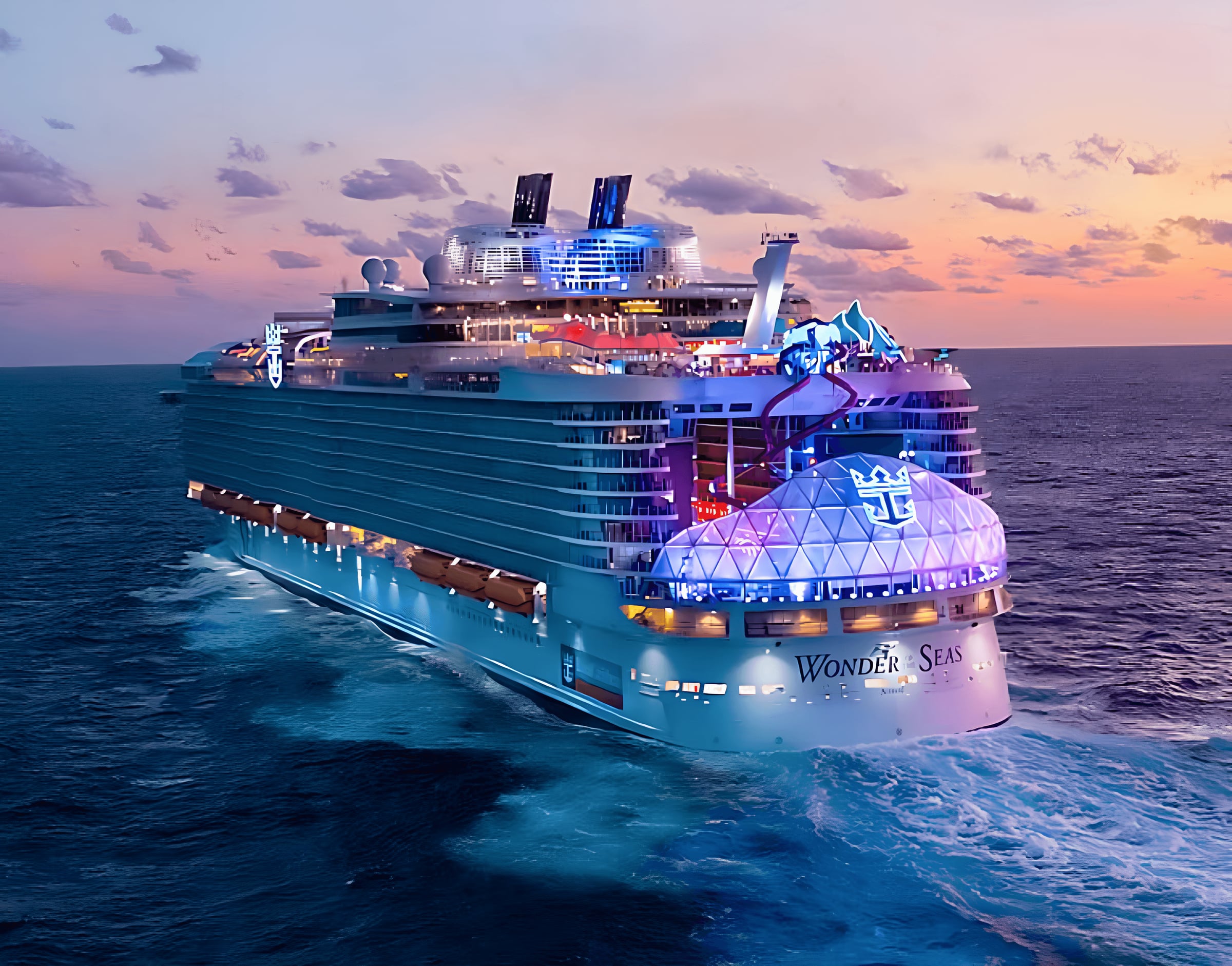
A 4-night sailing aboard the Wonder of the Seas — departing Port Canaveral on Aug 17, 2026.
Day by day
When to send only one option
Sometimes one is right.
If the consultation produced a clear brief — a specific ship, a fixed week, a stated budget — sending three options can read as though you weren't listening. In that case, send the one, explain precisely why it's the one, and offer to price alternatives if they'd like.
That's not a smaller proposal. It's a more confident one.
Handling "can you also price…"
You'll get the follow-up: could you also look at the week after? And Alaska? And what about Celebrity?
The instinct is to price everything. Don't — that's how you end up with a nine-option document and a client who never replies.
Instead, narrow first:
Happy to. So I don't bury you in options — which matters more, the specific week or getting the balcony? I'll build the two best versions around that.
You've done two things: cut the work, and reinforced that you're guiding rather than order-taking. Clients respond well to being narrowed, because the alternative is doing the narrowing themselves.
What to do when they still go quiet
If a client with three clear options goes dark, the problem usually isn't the options — it's that nothing made deciding feel urgent or easy.
Two fixes:
- A validity date. "Pricing held through Friday" turns an open-ended decision into a small deadline you didn't have to manufacture.
- A single obvious action. Not "let me know your thoughts" — one specific thing they can do the moment they feel ready, ideally in one tap.
The gap between feeling ready and doing something about it is where most quiet proposals actually die.
The short version
Send three options, not six. Vary one thing between them. Mark your recommendation and give a reason only you could give. Lead with the option you want anchored. Make the comparison scannable. And end with a deadline and one obvious action.
You'll send less and close more — and your clients will feel guided instead of graded.
For the full structure of a proposal that closes, read How to make travel proposals that win bookings. For cruise-specific option-building — cabin categories, decks and what actually matters — see what to include in a cruise quote.
Build three options in minutes, not an evening. First three proposals free — no card, no demo call. Build one free →
Keep reading
How to Follow Up After Sending a Travel Proposal
Silence isn't a no. It's usually a busy week. Here's a follow-up sequence with actual language — and why the worst message you can send is 'any thoughts?'
How to Make Travel Proposals That Win Bookings
Most proposals aren't lost on price. They're lost on clarity. Here's the anatomy of a proposal that closes — and how to build one in minutes instead of an evening.
Why Your Word Doc Proposal Is Costing You Bookings
Nobody rejects a proposal because it was a Word doc. They just quietly don't reply. Here's the mechanism — and the five places attachments leak bookings.